Complete guide
Daintree rainforest guide: plan a visit to the Daintree and Cape Tribulation
The Daintree is an ancient tropical rainforest in Far North Queensland. It runs to the coast north of Port Douglas, where it meets the Great Barrier Reef around Cape Tribulation. This guide brings together everything on our site in planning order, from getting there and choosing a tour to walks, wildlife, safety and where to stay.
Published
The Daintree is one of Australia’s great natural places. In Far North Queensland, ancient rainforest climbs over the mountains of the coastal range and runs down to white beaches, mangrove-lined rivers and the reef offshore. The section between the Daintree River and Cape Tribulation is among the most visited, and it is where "rainforest meets reef".
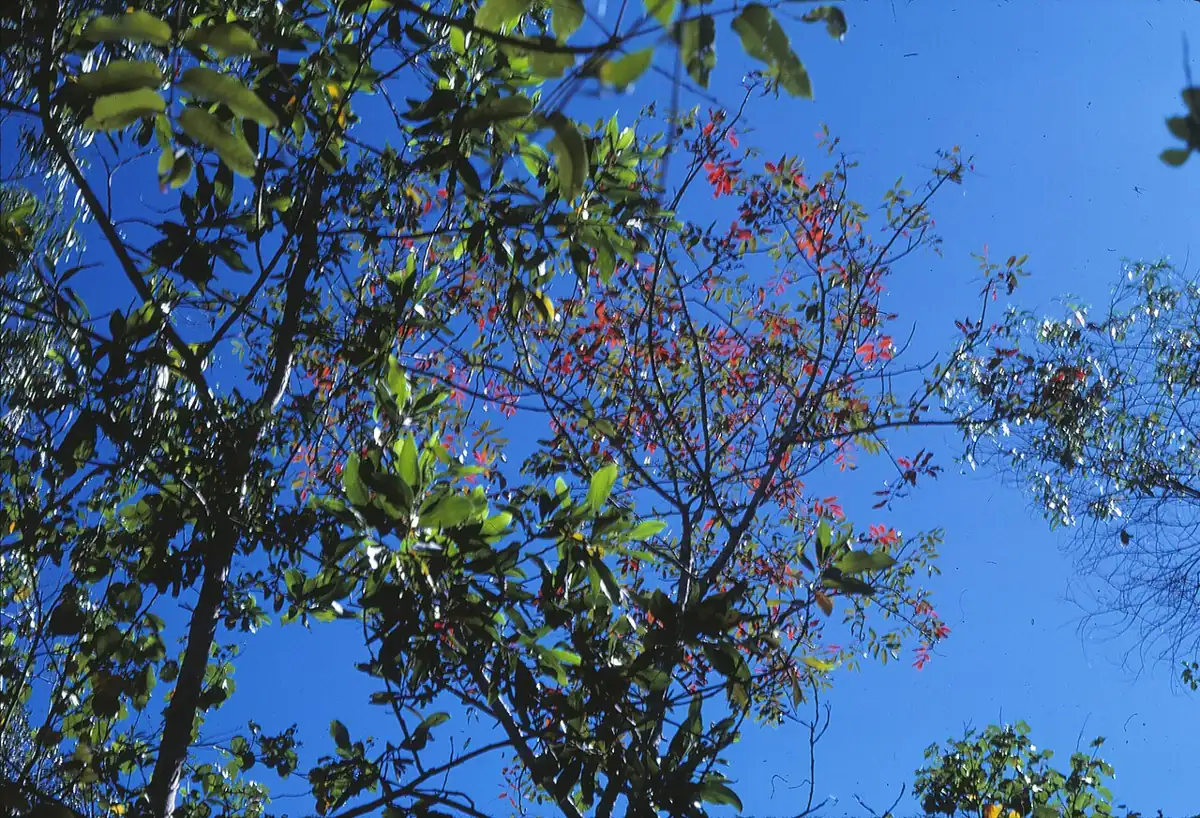
Photo: Complex mesophyll vine forest canopy Daintree National Park Queensland 1986 IMG 0058.jpg by John Robert McPherson, CC BY-SA 4.0, via Wikimedia Commons.

This guide puts every page on our site in planning order. Each stage answers the big questions briefly and links to a deeper guide.
The Daintree is the traditional country of the Eastern Kuku Yalanji people. In 2021, ownership of Daintree National Park was formally returned to the Eastern Kuku Yalanji, who jointly manage it with the Queensland Government. Learn more in our post on Eastern Kuku Yalanji Country.
Stage 1: Understand the Daintree
The Daintree forms part of the Wet Tropics of Queensland World Heritage Area, listed in 1988. Its significance lies in the age of its rainforest lineages and its remarkable biodiversity.
- The Wet Tropics World Heritage Area
- Eastern Kuku Yalanji Country
- Is the Daintree free? What you pay for and what you don’t
Stage 2: Getting there
Most visitors base themselves in Port Douglas or Cairns. North of Mossman, you cross the Daintree River on a vehicle ferry, then follow a winding sealed road through the rainforest to Cape Tribulation.
- Getting there: ferry, road and tour options
- The Daintree ferry: what to expect
- Daintree day trip from Cairns and our day trip page
Stage 3: Choose how to explore
Choose between a guided tour and a self-drive trip. Then decide on a day trip or a stay north of the river.
- Daintree tours
- Daintree from Cairns vs Port Douglas
- Itineraries
- Mossman Gorge or Cape Tribulation?
- Overnight north of the ferry and where to stay
Stage 4: Things to do
- Things to do in the Daintree
- Cape Tribulation
- Mossman Gorge
- Crocodile cruises on the Daintree River
- Daintree rainforest walks you can do without a tour
- Further afield: Atherton Tablelands and white-water rafting
Stage 5: Stay safe
The Daintree is wild country. Crocodiles live in its rivers, creeks and coastal waters. Cassowaries roam the forest. Marine stingers are present in the sea in the warmer months.
- Cassowary safety in the Daintree
- Crocodile and stinger safety: can you swim in the Daintree?
- Daintree wildlife manners
Stage 6: Timing your visit
Quick answers
About this guide
Daintree Tours is an independent visitor guide. We do not operate tours. Where facts change, such as ferry hours, fares, tour departures and road conditions, we link to the official source rather than print details that may be out of date. Read our editorial policy.
All guides in this series
- Is the Daintree free? What you pay for and what you don’t — A clear breakdown of what costs money in the Daintree and what doesn’t, from free national park boardwalks to the river ferry, the Mossman Gorge shuttle, attractions, tours, camping and fuel, so you can plan a visit on any budget.
- Daintree from Cairns vs Port Douglas: which day tour to book — Cairns departures are a long highway day into the Daintree; Port Douglas departures hide less transfer. Compare the two SSR-verified GetYourGuide day tours (t45369 and t681771), who each suits, and when to self-drive instead.
- Daintree rainforest walks you can do without a tour — A self-guided guide to the Daintree’s best boardwalks and walking tracks: Jindalba, Marrdja, Dubuji, Kulki, Mossman Gorge and the challenging Mount Sorrow Ridge Trail. Includes difficulty, what you’ll see, safety and how to plan a walking day.
- Cassowary safety in the Daintree: how to see one and stay safe — Everything visitors need to know about the southern cassowary: why it matters, where you might see one in the Daintree, how to behave if you meet one, driving in cassowary zones, and why you must never feed them.
- Can you swim in the Daintree? Crocodile and stinger safety explained — Why swimming at Cape Tribulation and in Daintree waterways is risky, covering estuarine crocodiles, marine stingers, rips and flash flooding, and how to enjoy the water safely, from stinger suits to croc-wise habits and safer alternatives.
- Daintree FAQ: 26 common questions answered — Direct answers to the most common Daintree questions: getting there, the ferry, costs, walks, wildlife, safety, seasons and where to stay. Each one links to our detailed guides.
Frequently asked questions
What is so special about the Daintree Rainforest?
The Daintree is part of the Wet Tropics of Queensland World Heritage Area and is regarded as one of the oldest continuously surviving tropical rainforests on Earth. It holds an exceptional concentration of plant and animal species, including ancient flowering plant lineages, and it meets the Great Barrier Reef at Cape Tribulation.
Is it free to visit the Daintree Rainforest?
Entry to Daintree National Park for day visits is free, and many boardwalks are free to walk. You do pay for the Daintree River vehicle ferry, the Mossman Gorge shuttle bus, private attractions such as the Daintree Discovery Centre, guided tours and camping permits.
Is the Daintree closer to Cairns or Port Douglas?
Port Douglas is much closer. Mossman Gorge is a short drive from Port Douglas, and the Daintree River ferry is further north. From Cairns, allow a long day or an overnight stay to reach Cape Tribulation comfortably.
Can you do a day trip to the Daintree from Cairns?
Yes. Many tours run day trips from Cairns and Port Douglas, and self-drivers can do it in a long day. An overnight stay north of the river gives a far more relaxed experience.
Do you need a 4WD for the Daintree?
No. The road from the ferry to Cape Tribulation is sealed and suitable for conventional cars. North of Cape Tribulation, the Bloomfield Track is a 4WD-only route subject to closures. Check road conditions before travelling.
When is the best time to visit the Daintree?
The drier months, roughly May to October, bring more comfortable weather and fewer road disruptions. The wet season, roughly December to April, is lush and dramatic, but expect heavy rain, possible flooding and marine stingers in the sea.