Guide
Can you swim in the Daintree? Crocodile and stinger safety explained
Why swimming at Cape Tribulation and in Daintree waterways is risky, covering estuarine crocodiles, marine stingers, rips and flash flooding, and how to enjoy the water safely, from stinger suits to croc-wise habits and safer alternatives.
Published
Cape Tribulation’s beaches look like paradise: white sand, turquoise water and rainforest down to the shore. It is natural to want to swim. In the Daintree, though, the water hides real dangers, and the safest choice is usually to admire it from the shore.
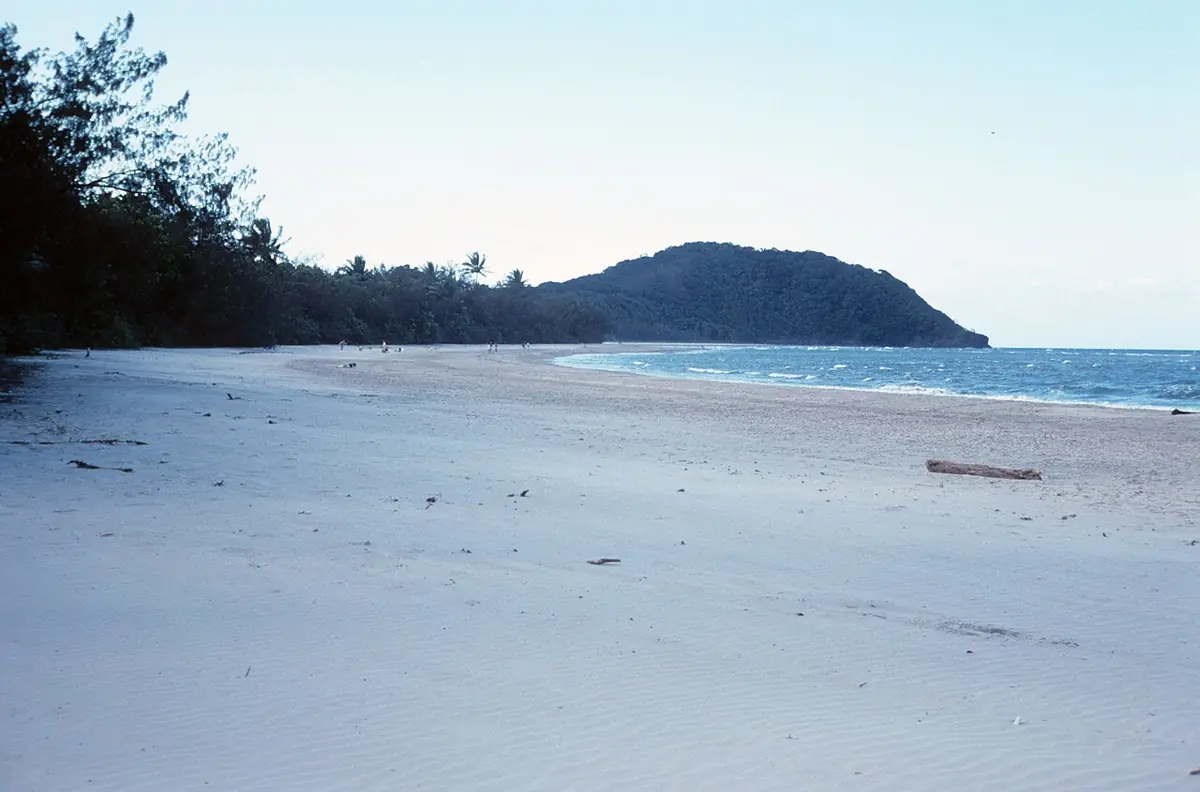
Photo: Cape Tribulation Beach, 1989 QUT-507.jpg by Iraphne R. Childs, CC BY 4.0, via Wikimedia Commons.

This guide explains why, and how to enjoy the Daintree’s waterways safely.
The short answer
Don’t swim in the Daintree’s rivers, creeks, estuaries or mangroves, and think very carefully before swimming at its beaches. The main risks are:
- estuarine crocodiles in fresh, brackish and salt water
- marine stingers, including box jellyfish and Irukandji, especially in warmer months
- unpatrolled beaches, with currents and no lifeguards
- flash flooding in creeks and gorges after rain
Estuarine crocodiles
Estuarine (saltwater) crocodiles live throughout Far North Queensland’s coastal waterways. In the Daintree, they inhabit the Daintree River, creeks, mangroves and coastal waters, and they can move along beaches and between river systems.
They are ambush predators. A crocodile can be completely hidden just below the surface or at the water’s edge.
Be Crocwise
The Queensland Government’s Be Crocwise advice includes:
- Expect crocodiles in all Far North Queensland waterways, even if there are no warning signs.
- Obey crocodile warning signs.
- Never swim in water where crocodiles may live.
- Stay well back from the water’s edge, and never stand on logs or branches overhanging water.
- Don’t clean fish or leave food scraps near the water, at campsites or at boat ramps.
- Never feed crocodiles. It is illegal and dangerous.
- Be extra careful at night and around dawn and dusk, when crocodiles are more active.
- Camp at least 50 metres from the water’s edge where possible.
- Report crocodile sightings to the Queensland Government.
See crocodiles safely
The best way to see crocodiles is on a Daintree River crocodile cruise with an experienced operator.
Marine stingers
Tropical Queensland waters are home to dangerous jellyfish, including the box jellyfish and the tiny Irukandji. Stings can be life-threatening.
- Stinger season: dangerous stingers are most common in the warmer months, generally from about October or November to May, but they can be present at other times.
- Wear a full-body stinger suit (lycra) if you enter the sea.
- Swim only at patrolled beaches with stinger nets during patrol hours where possible. Cape Tribulation’s beaches are not patrolled.
- Vinegar is the recommended first aid for box jellyfish and Irukandji stings. Pour it liberally on the area, call 000 and get urgent medical help.
Follow the latest Queensland Government marine stinger guidance.
Unpatrolled beaches and currents
Daintree beaches are remote and unpatrolled. Tides, currents and rips can be strong, and help may be far away.
- Never swim alone.
- Avoid swimming near creek mouths, which are both crocodile habitat and areas of strong current.
- Check conditions on Beachsafe.
Creeks, gorges and flash floods
Rainforest creeks look inviting, but they carry two risks: crocodiles in lowland and tidal sections, and sudden rises in water level after rain, even rain upstream you cannot see.
Mossman Gorge deserves special mention. The Mossman River can rise rapidly and has strong currents and slippery granite boulders. People have drowned there. Swim only where permitted, follow all signs and stay out of the water after rain or when the river is flowing strongly. See our Mossman Gorge guide.
Safer ways to enjoy the water
| Option | Why it’s safer | Notes |
|---|---|---|
| Accommodation pools | No crocs or stingers | Many Daintree stays have pools |
| Patrolled beaches with stinger nets (e.g. Port Douglas) | Lifeguards and nets in season | Swim between the flags, during patrol hours |
| Reef snorkelling tours | Stinger suits, supervision, open water away from estuaries | Book with licensed operators |
| River cruises | See crocs and wildlife from a boat | Excellent for photography |
| Beach walks and lookouts | Enjoy the scenery without risk | Stay back from the water’s edge |
Safety with children
- Keep children well away from the water’s edge at beaches, rivers and creeks.
- Supervise closely at boardwalks near mangroves and creeks.
- Explain crocodile and stinger rules in simple terms before you arrive.
- Choose a pool or a patrolled, netted beach for swimming.
First aid and emergencies
- Emergency: call 000.
- Box jellyfish or Irukandji sting: pour vinegar on the sting, call 000, and give CPR if required.
- Crocodile sighting: move away from the water and report it.
- Mobile coverage is patchy north of the river, so plan ahead and know where help is.
Where to go next
Frequently asked questions
Why can’t you swim at Cape Tribulation?
Swimming at Cape Tribulation is strongly discouraged because estuarine crocodiles live in the area’s creeks, rivers and coastal waters, and dangerous marine stingers such as box jellyfish and Irukandji are present, especially in the warmer months. The beaches are not patrolled.
Are there crocodiles at Cape Tribulation beach?
Yes. Estuarine (saltwater) crocodiles are found in Daintree rivers, creeks, mangroves and coastal waters, including around Cape Tribulation’s beaches. Always assume a crocodile could be present in any water body in Far North Queensland.
When is stinger season in the Daintree?
Dangerous marine stingers are most common in the warmer months, generally from about October or November to May, but they can occur at other times. Wear a full-body stinger suit if you enter the sea, and follow local warnings.
Is it safe to swim at Mossman Gorge?
Swimming is possible in some areas at Mossman Gorge in suitable conditions, but the river can rise rapidly and has strong currents and slippery rocks. People have drowned there. Follow all signs and never enter the water after rain or when it is flowing strongly.
Where can you swim safely near the Daintree?
Safer options include accommodation pools, and patrolled beaches with stinger nets further south, such as at Port Douglas during patrol hours and when nets are in place. Snorkelling trips to the reef provide stinger suits and supervision.