Guide
Cassowary safety in the Daintree: how to see one and stay safe
Everything visitors need to know about the southern cassowary: why it matters, where you might see one in the Daintree, how to behave if you meet one, driving in cassowary zones, and why you must never feed them.
Published
Seeing a southern cassowary in the wild is one of the Daintree’s most memorable experiences. These tall, flightless birds have a helmet-like casque and blue and red skin on the neck. They play a vital role in the rainforest, and they are listed as endangered in Australia’s national threatened species list.
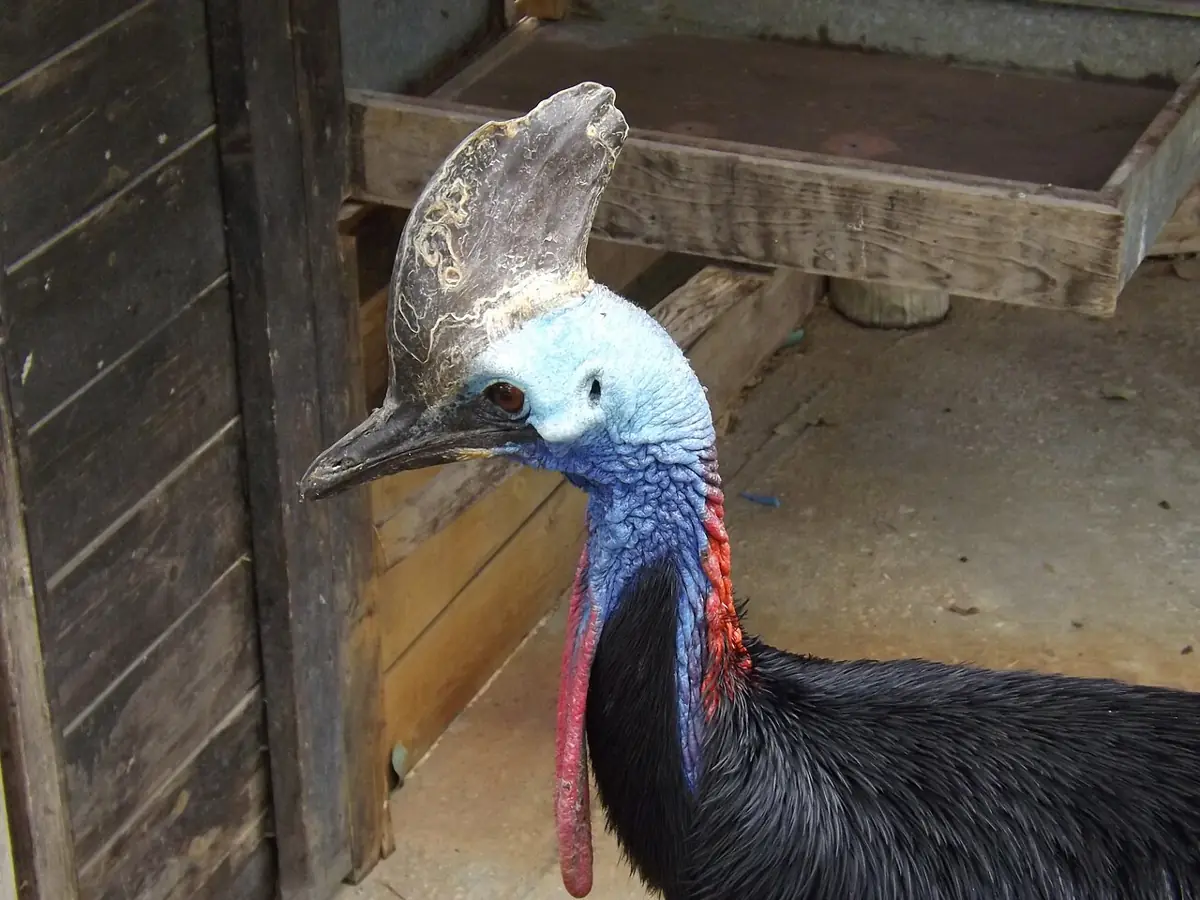
Photo: Double-wattled Cassowary Biblical Zoo.jpg by SuperJew, CC BY-SA 3.0, via Wikimedia Commons.

Cassowaries are also big, strong wild animals. Knowing how to behave around them keeps you safe and helps protect the species.
Why cassowaries matter
Cassowaries are often called "rainforest gardeners". They eat fallen fruit, including fruit too large for most other animals, and disperse the seeds through the forest. Some rainforest plants rely heavily on cassowaries for seed dispersal, so the birds help keep the Daintree diverse.
In cassowary families, the male incubates the eggs and raises the striped chicks on his own, which is unusual among birds. Males with chicks can be especially protective.
The main threats
- Vehicle strikes on roads through the rainforest
- Dog attacks
- Habitat loss and fragmentation
- Feeding by people, which draws birds to roads and makes them approach humans
- Disease and extreme weather events, such as severe cyclones
Where you might see one
Cassowaries live throughout lowland and upland rainforest in the Wet Tropics. In the Daintree, they may appear:
- crossing or walking beside the road between the Daintree River and Cape Tribulation
- on or near walking tracks and boardwalks
- around the edges of properties and clearings
Sightings are never guaranteed. Many visitors don’t see one. Early mornings and late afternoons may improve your chances, but never go looking off-track.
What to do if you meet a cassowary
The Queensland Government’s "Be cass-o-wary" advice is simple:
- Stay calm and keep your distance.
- Back away slowly, keeping the bird in sight.
- Put something between you and the bird, such as a backpack, a tree or your car.
- Do not run and do not turn your back.
- Never approach, especially an adult with chicks.
- Never feed a cassowary. Don’t carry food in your hands or eat while watching one.
- Leave the area if the cassowary seems agitated, for example if it stares, lowers its head or makes booming sounds.
Signs a cassowary may feel threatened
- staring at you and moving towards you
- lowering its head and fluffing its feathers
- deep booming or hissing sounds
- a male standing between you and chicks
If you see these signs, back away calmly and give the bird more space.
Driving in cassowary country
Roads through the Daintree pass through cassowary habitat. Yellow cassowary crossing signs mark known crossing areas.
- Slow down, especially in signed zones, around bends and at dawn and dusk.
- Watch roadsides, because cassowaries can step out suddenly.
- Never stop to feed a bird on the road, or encourage it to approach your car.
- If a cassowary is on the road, stop safely and wait for it to move on.
- Report injured or dead cassowaries to the Queensland Government wildlife hotline or local authorities.
Our guide to getting there covers the drive north from the ferry.
Why feeding is so harmful
Feeding cassowaries is illegal in Queensland, and it causes real harm:
- birds learn to approach people, which increases the risk of attacks
- birds are drawn to roads and properties, which increases vehicle strikes and dog attacks
- birds’ natural diet and role in seed dispersal are disrupted
Do not leave food scraps, fruit or rubbish where cassowaries could reach them, including at picnic areas and campsites.
Dogs and cassowaries
Dogs are not permitted in national parks. Outside parks, keep dogs restrained and supervised in cassowary areas. Dogs can harm cassowaries and provoke defensive reactions.
Photography etiquette
- Use a zoom lens and stay at a safe distance.
- Don’t use flash, and never block a bird’s path.
- Don’t chase or follow a cassowary to get a better shot.
- Don’t share precise locations of nesting birds or chicks.
Cassowary safety at a glance
| Situation | Do | Don’t |
|---|---|---|
| Cassowary on a track | Back away slowly, keep it in view | Run, approach or turn your back |
| Bird approaching you | Put an object between you, leave calmly | Offer food or stand your ground |
| Adult with chicks | Give extra space, turn around if needed | Get between the adult and chicks |
| On the road | Slow down, stop safely, wait | Speed, honk aggressively, feed |
| Picnicking | Keep food packed away | Leave scraps behind |
Where to go next
Frequently asked questions
What should you do if a cassowary approaches you?
Stay calm and back away slowly, keeping the bird in view. Put something such as a backpack, a tree or a car between you and the cassowary. Don’t run, don’t turn your back, and never approach a cassowary, especially an adult with chicks.
Are cassowaries dangerous?
Cassowaries are generally shy and avoid people, but they are large, powerful birds with dagger-like inner claws. They can injure people if threatened, cornered, protecting chicks or if they have been fed and associate people with food.
Can cassowaries be friendly?
Cassowaries are wild animals, not friendly or tame. A cassowary that approaches people has usually been fed before, which is dangerous for both the bird and people. Never feed them.
Is it illegal to feed cassowaries?
Yes. Feeding cassowaries is illegal in Queensland and attracts penalties. Feeding causes birds to approach people and roads, increasing the risk of attacks and vehicle strikes.
Where can you see cassowaries in the Daintree?
Cassowaries may be seen anywhere in the Daintree lowland rainforest, including on roadsides and walking tracks between the Daintree River and Cape Tribulation. Sightings are never guaranteed, so watch from a safe distance if you are lucky.